Field note
5 min read
Fern hollow, Canopy Line
Rain is not a reason
Mara on the Canopy Line when the light does not come.

Mara Lindqvist
Canopy lead

On a bright day you look up. On a wet one you finally look at the floor.
People book the Canopy Line for the shaft, and about one morning in four the shaft does not come. Cloud sits on the ridge, the rain starts before the trailhead, and the whole line is walked under a roof of grey. We get asked, gently, at the gate and again at the first rest, whether it is worth it. It is. Some seasons I think it might be worth more.
I should say what a wet morning here actually looks like, because people picture a downpour and it is rarely that. It is a fine, steady rain that arrives from the ridge as a sound before it arrives as water. The canopy takes the first of it. For twenty minutes you walk under trees that are raining on themselves, and only then, when the leaves are full, does it start to come through in drops the size of coins. By then your shell is on and your legs have given up, and that is the moment the walk begins.
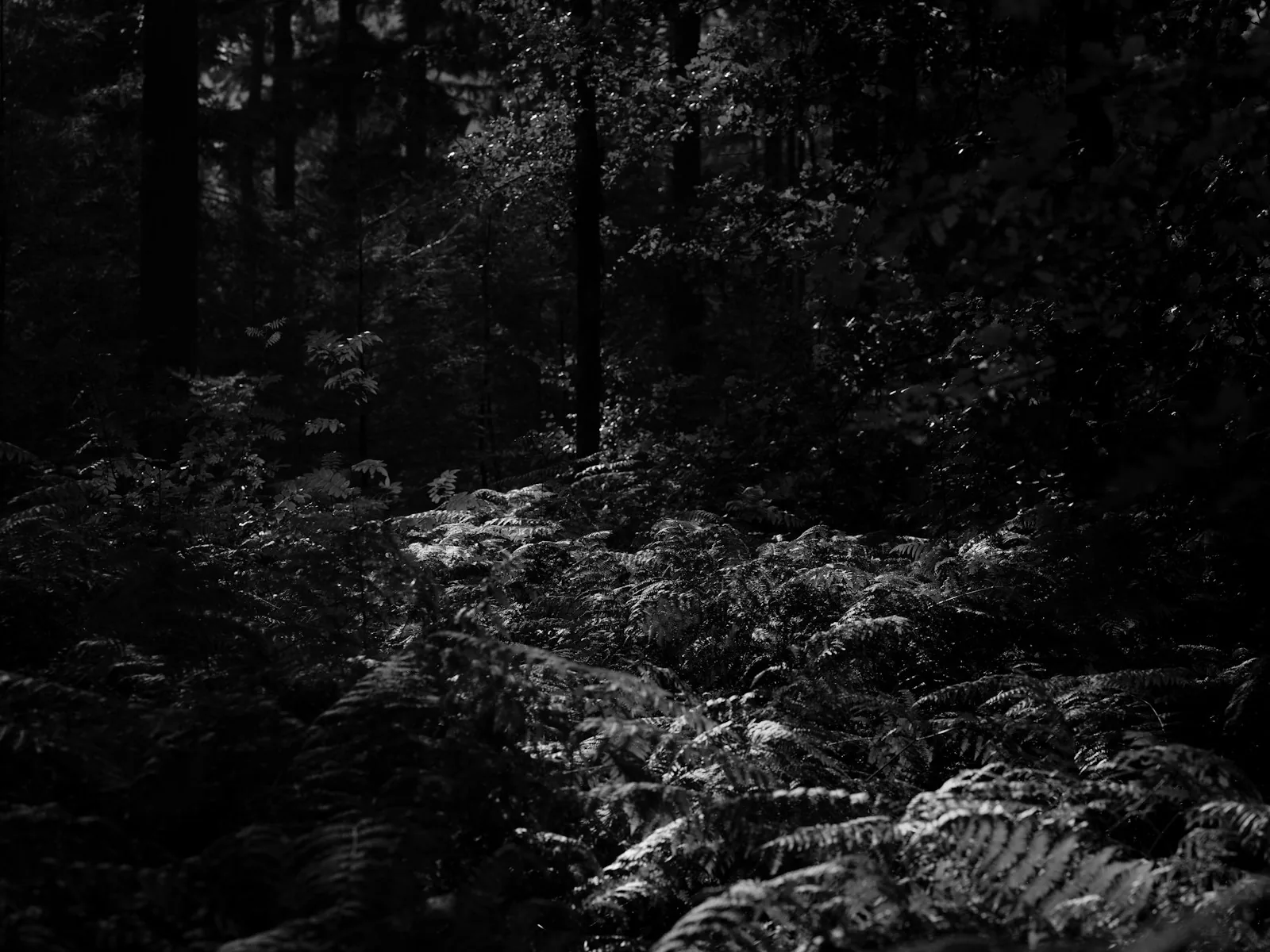
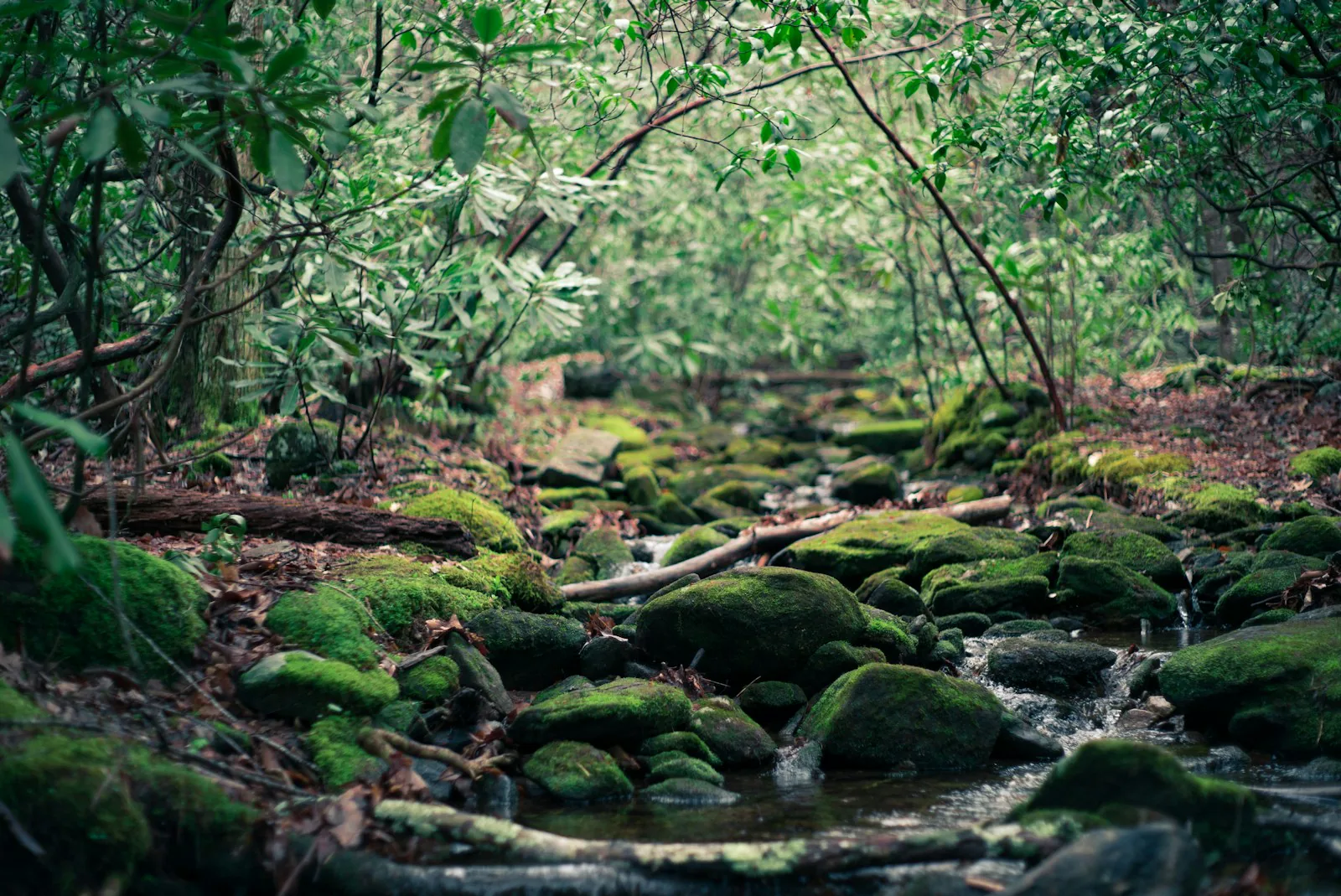
A bright morning pulls the eye up and keeps it there. A wet one puts it on the floor, and the floor of this forest is where most of it lives. The ferns in the hollow are a different green with water on them, a green with blue in it. The moss on the fallen trunks goes almost black and then, where a little light catches it, almost gold. The creek, which on a dry day you hear and do not see, is suddenly everywhere, running down the path itself in places, and the group walks it like a stream.
What you see when there is nothing to see
Three things, in the order the group finds them.
The trunks. In bright light a trunk is a silhouette against the sky and you do not look at it twice. In rain the bark is dark and wet and every ridge in it holds a line of water, so a beech that was a grey pole at seven is a carved thing at nine. People stop for trunks on a wet day. Nobody stops for a trunk on a dry one.
The fungus. It is there in any weather but rain lifts the colour out of it: the orange shelves on the fallen oak past the hollow, the small white cups in the leaf litter that you could walk over a hundred times without noticing. Mara carries a hand lens for exactly this. She will not tell you what any of it is called. She will hand you the lens and wait.
The smell, which has no picture and so nobody expects it. Wet leaf litter, crushed fern, the cold mineral smell that comes off the creek stones. A dry forest smells of warm resin and dust. A wet one smells like the inside of the ground.
How the walk changes
We go slower and we stop more, because there is more to stop for at your feet than there ever is overhead. The rest at the hollow, which is fifteen minutes on a bright day because everyone wants to be moving toward the light, stretches to half an hour. Nobody minds the tea. The stove goes under the leaning ash where the ground stays nearly dry, and the group stands close to it without being asked.
The sound changes completely. On a dry day the forest is quiet and a group of eight is the loudest thing in it. A wet day is a continuous low noise on ten thousand leaves that makes the group stop talking without being told to. You cannot hear the person behind you unless they raise their voice, so nobody does. By the creek crossing the walk has gone silent, and it stays that way to the top.
On a bright day the walk is a series of arrivals. On a wet one it is one long looking-down, and the arrivals are small and frequent and mostly at knee height.
The line itself does not change. Same path, same stops, same turn for home at the upper trail. What changes is the pace and the order of attention.
The crossing
The creek crossing is the one place a wet day asks something of you. On a dry morning it is four stones and you barely notice them. After a night of rain the water is over the third stone and moving. Mara crosses first, stands on the far bank, and takes each person's hand for the last step. It is not dangerous. It is wet, and cold, and for about three seconds it is the whole world, and every group talks about it afterward as if it were the summit.
What to bring
A shell you trust, one you have actually worn in rain, not one that was waterproof in the shop.
Trousers that dry on you. Nothing that holds water against the leg.
Boots you have walked in. True of every line and truer here, because wet stone finds a new boot in the first kilometre.
The acceptance, made at the gate and not renegotiated, that your legs will be wet regardless of what you do about it.
Leave the umbrella in the car. Leave the camera in the pack for the first hour, because it will fog and you will spend the walk wiping it instead of looking. We provide the tea and the stove and the dry place to stand. The forest provides the rest, and on a wet day it is generous.
If it is really coming down
There is a point, maybe three mornings a season, where we call it at the gate. Not for the rain, which we walk in, but for the creek, which we do not cross when it is over the fourth stone, and for lightning, which nobody argues with. You will get a message by six. Otherwise assume we are walking, because we are, and put the kettle on before you leave the house. You will want to have had something warm.
Written for 09:15 on the line
More from the line.

Season
5 min read
September, when the light comes back
Elin on the first cold mornings, and why the Night Line is best right now.

Elin Hartmann

Gear
4 min read
One pack between eight
Tomás on the shared kit, and why nobody carries the stove alone.
Tomás Ferreira
Light
5 min read
Where the water goes quiet
Jonas on the ten minutes at the far shore when the lake stops moving.

Jonas Vik