Light
5 min read
The far shore, Lake Line
Where the water goes quiet
Jonas on the ten minutes at the far shore when the lake stops moving.

Jonas Vik
Weather and water
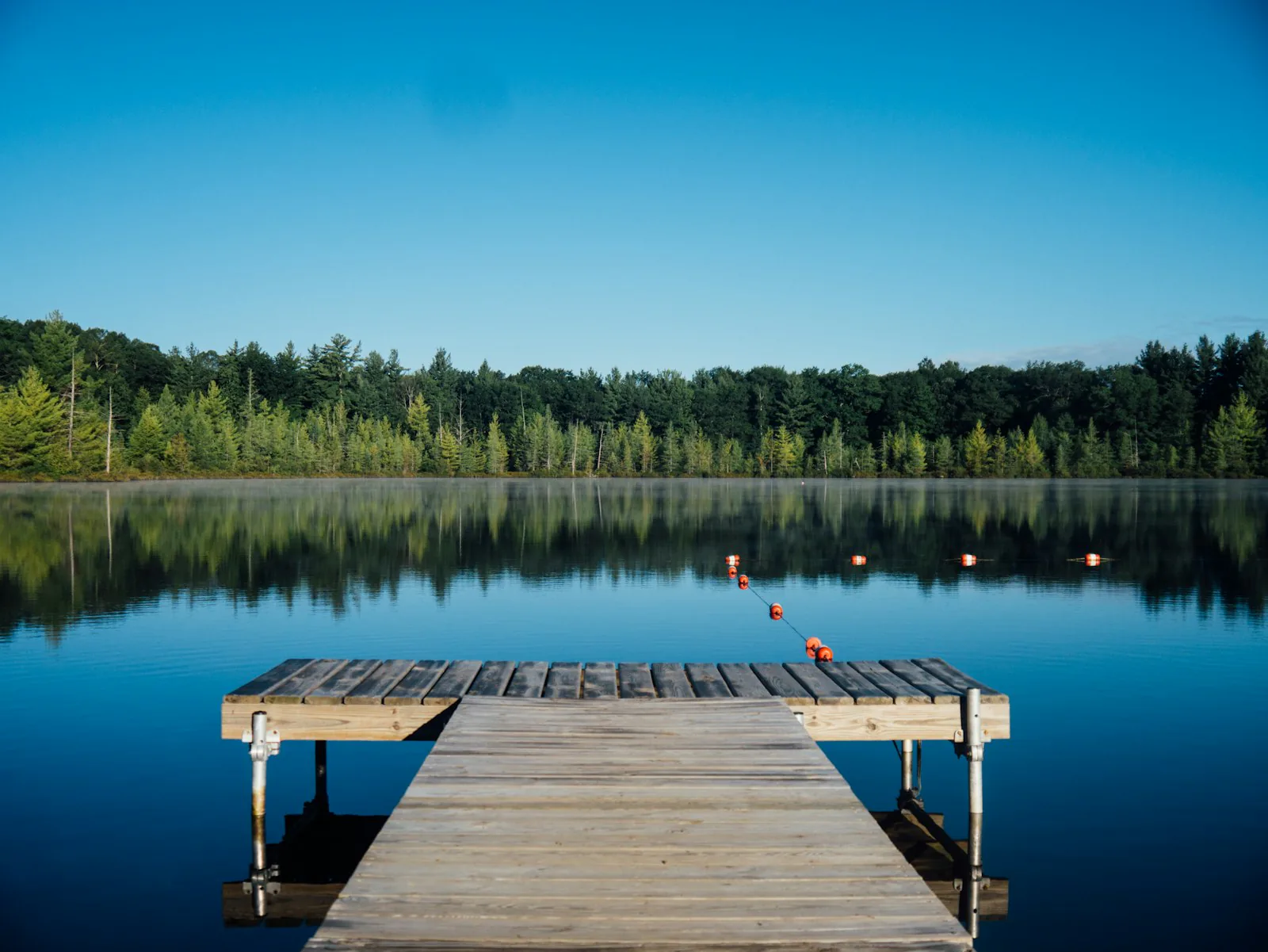
The lake is not still. It is waiting, and there is a difference you can see.
The Lake Line is sold as the gentle one, and it is, but it has a moment that none of the other lines have, and it lasts about ten minutes. It happens at the far shore, at the flat rock past the reed bed, somewhere between twenty past six and half past, depending on the month. The wind that has been moving across the water since we left the boathouse stops. Not drops. Stops. And the lake goes flat, and the far trees fall into it upside down, and for ten minutes you are standing on the edge of two forests.
I have walked this line for six seasons and I still do not fully understand why it happens. The wardens say it is the air over the water and the air over the land reaching the same temperature for a few minutes before the sun tips the balance. That sounds right. It also does not explain why some mornings it does not come at all.
The lake is not still. It is waiting, and there is a difference you can see.
Reading the surface
You can see it coming if you know where to look, and I would rather you look than have me point.
The reed bed goes first. The stems stop ticking against each other. That is the sound going out of the morning, and it happens about two minutes before the water.
The far bank sharpens. Trees that were a smear of dark green get edges. Then trunks. Then, if it is really coming, individual branches, hanging down into the lake.
The light changes colour. Moving water scatters it warm. Flat water hands it back exactly as it came, which at that hour is cold and pale and closer to silver than gold.
When all three have happened the group has usually stopped talking on its own. I do not ask for silence on this line. The lake does.
What to do with it
Nothing is the honest answer, and it is the one people find hardest. Ten minutes is a long time to stand on a rock and look at water, and about a third of every group reaches for something: a phone, a flask, the person next to them. All of that is fine. But the ones who write to us afterward are always the ones who did nothing, and they always describe the same thing, which is the moment they stopped waiting for it to be over.
Stand where the rock is flat. Not at the edge, a step back, so the water fills your whole view and the edge of the rock is out of it.
Look at the far trees, not the near water. The reflection reads as a place, not a picture, when you look at the far side.
When the wind comes back, and it always comes back from the left, watch it arrive. It crosses the lake as a dark line and the forest underneath breaks up trunk by trunk. That is the end of it and it is almost the best part.
If it does not come
Roughly one morning in three the wind never drops. The lake stays a lake. We still stop at the rock, because the tea is there, and because a moving lake at half past six is not a poor substitute for anything. But I will tell you honestly at the boathouse if the morning does not feel like one of the good ones, and I have been wrong about that in both directions.
The rest of the morning
After the rock the line turns along the north shore and the walk becomes what it says it is: gentle, flat, six kilometres of moss and wet stone with lunch at the end. People are quieter on the way back. Not because anyone asks them to be. Because for ten minutes the lake asked them to be, and it is hard to get loud again after that.
If you are coming
Boots you have walked in, laced twice. The shore path does not forgive a new boot.
Something warm for the rock. It is the coldest stop on any line, because you are standing still beside cold water in the last of the night air.
Nothing to photograph the lake with for the first two minutes. After that, do what you like. It will not look like this in the picture, and you will take the picture anyway, and that is fine.
Written for 06:20 on the line
More from the line.

Season
5 min read
September, when the light comes back
Elin on the first cold mornings, and why the Night Line is best right now.

Elin Hartmann

Gear
4 min read
One pack between eight
Tomás on the shared kit, and why nobody carries the stove alone.
Tomás Ferreira

Field note
5 min read
The twenty minutes before you can see
You stand in the dark until it stops being dark. That is the first stop.
Elin Hartmann