Field note
5 min read
Trailhead, Night Line
The twenty minutes before you can see
You stand in the dark until it stops being dark. That is the first stop.

Elin Hartmann
Head guide

The forest is not black. It is a hundred greys you have not learned yet.
We ask for one thing at the gate and it is the hardest thing on the line: switch the headlamp off and keep it off. People do it politely, the way you agree to a rule you plan to bend. Then the car park lights go out behind us, the road goes quiet, and the dark closes over the group like water. Someone always laughs a little, because there is nothing to look at and the body does not like that.
For the first five minutes the forest is a wall. Not a dark forest, a wall, with no depth in it at all. The path you were standing on is gone. The person beside you is a sound. Hands come up in front of faces, not to see them but to check they are still there. This is the part people remember, and it is the part that makes them want the lamp back, and the lamp is the one thing that would ruin it.
It takes the eye about twenty minutes to open properly. Not to adjust, that happens in seconds, but to open, to give up on the idea that seeing is something it does quickly.
What the twenty minutes look like
Five minutes. A wall. No depth, no path, no person beside you except as a sound.
Ten. The wall has a top edge, a slightly less dark against a slightly more dark, which is the canopy against the sky.
Twelve. Shapes in the top edge, gaps where the branches are thin.
Fifteen. Trunks, first as an absence, then as things. The path arrives as a paler ribbon on the floor, because feet have worn the moss off it and bare soil holds more light than moss does.
Eighteen. Depth. The forest is a place with a near and a far, and the trunk in front of you is in front of the trunk behind it.
Twenty. Someone says oh, out loud, without meaning to, and that is when we walk.
Nobody has ever said it before seventeen minutes. Nobody has ever needed longer than twenty-five. I have stood at this gate for eleven seasons and the timing is the most reliable thing on the line.
What the eye is doing
The chemistry is simple and the patience is not. In daylight the cones do the seeing and they are quick and sharp and useless in the dark. When the light goes, the rods take over, but the rods run on a pigment called rhodopsin that daylight destroys and darkness rebuilds, and the rebuilding is slow. Twenty minutes is how long it takes to get most of it back. Forty is how long it takes to get all of it.
The forest is not black. It is a hundred greys you have not learned yet.
Rods do not see colour, so the night forest is not black and it is not green. By the time you reach the first rest you will have learned a dozen of its greys and be able to tell moss from stone by tone alone.
You cannot rush it and you cannot keep it. One glance at a phone screen, one car headlight through the trees, one person who forgets and thumbs their lamp on to check a strap, and the twenty minutes start again from zero. This is why the phones stay in the packs, not the pockets, and why the lamps stay in the packs too, and why the only light on the line is the small red one the guide carries and does not use.
Red
Red light does not bleach rhodopsin, or barely does, which is why the one lamp we allow is red and why it is the guide's and not yours. It exists for a turned ankle and nothing else. On most walks it is never switched on. On the walks where it is, it goes off again in under a minute, and the group stands still until the eye has caught up.
Why we do it this way
There is a version of the Night Line with headlamps, and other people run it, and it is a walk through a forest in a moving circle of white light, and you see the circle. You see what is in it, brightly, and nothing outside it, and the forest is a series of lit objects passing through a beam. It is not dark. It is a corridor.
The version without lamps is the forest. All of it, at once, in grey, with your own eyes doing the work they were built to do and have not been asked to do since you were a child. Owls cross the path and you see them. The creek is a pale line before it is a sound. The clearing, when you reach it at first light, is not a relief from the dark but the end of something, and most people are sorry to see it.
I have walked this line for eleven seasons and I still stand at the gate for the full twenty. Not for the group. For the moment the path shows itself, which I have never once managed to see coming.
If you are coming
Eat before, not at the gate.
Wear the boots you have already walked in, because you will not see your feet for two hours.
Put the phone in the bottom of the pack at the car, not in a pocket.
When the dark closes, let it. Do not fight it, do not reach for anything, do not talk to fill it.
It is the only part of the night that asks nothing of you, and it is over in twenty minutes, and you will want it back.
Written for 04:50 on the line


More from the line.

Season
5 min read
September, when the light comes back
Elin on the first cold mornings, and why the Night Line is best right now.
Elin Hartmann

Gear
4 min read
One pack between eight
Tomás on the shared kit, and why nobody carries the stove alone.
Tomás Ferreira
Light
5 min read
Where the water goes quiet
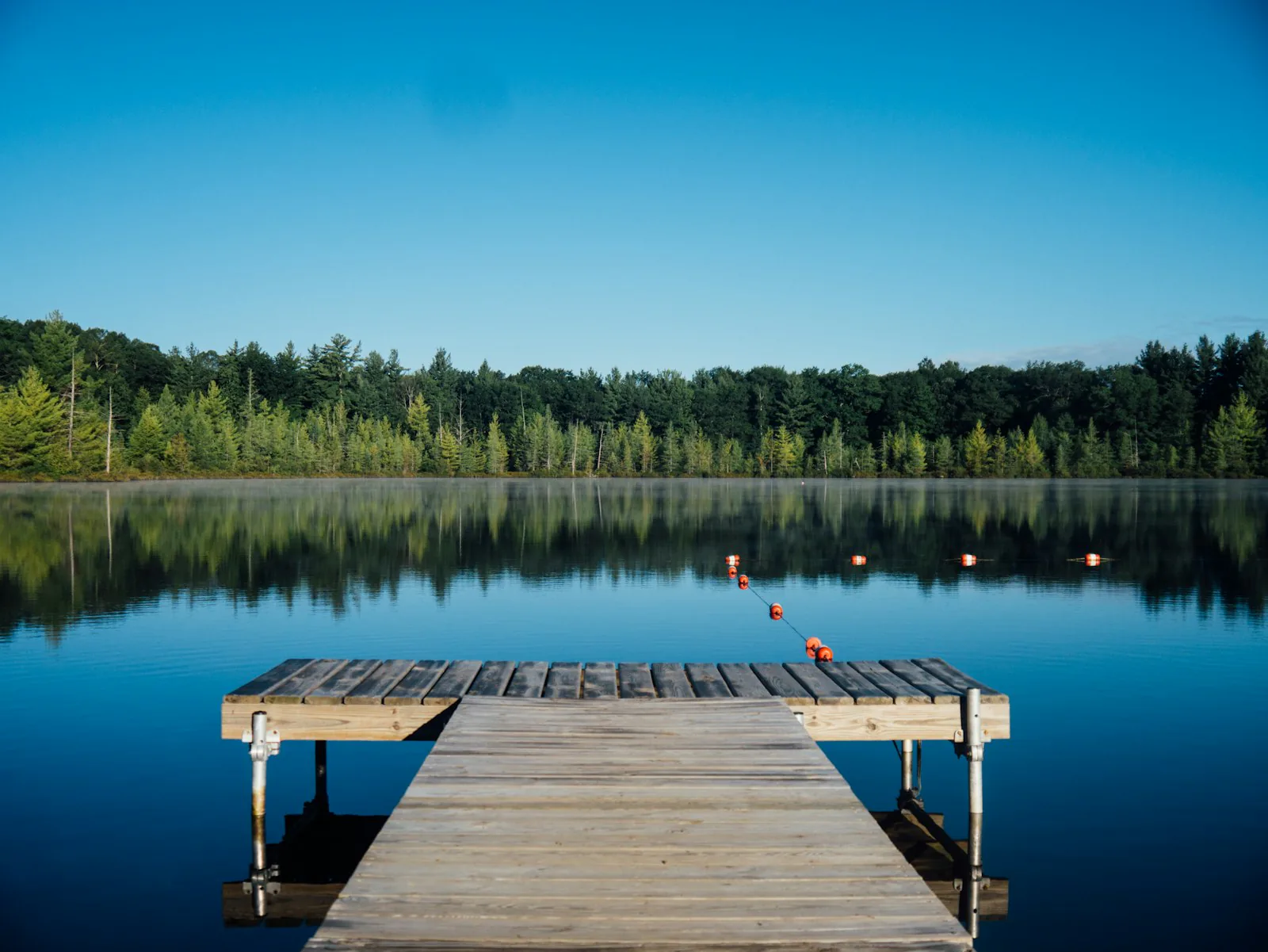
Jonas on the ten minutes at the far shore when the lake stops moving.

Jonas Vik