Season
5 min read
The whole forest
The month the forest closes
Elin on the closure, the nests, and the month we give back.

Elin Hartmann
Head guide
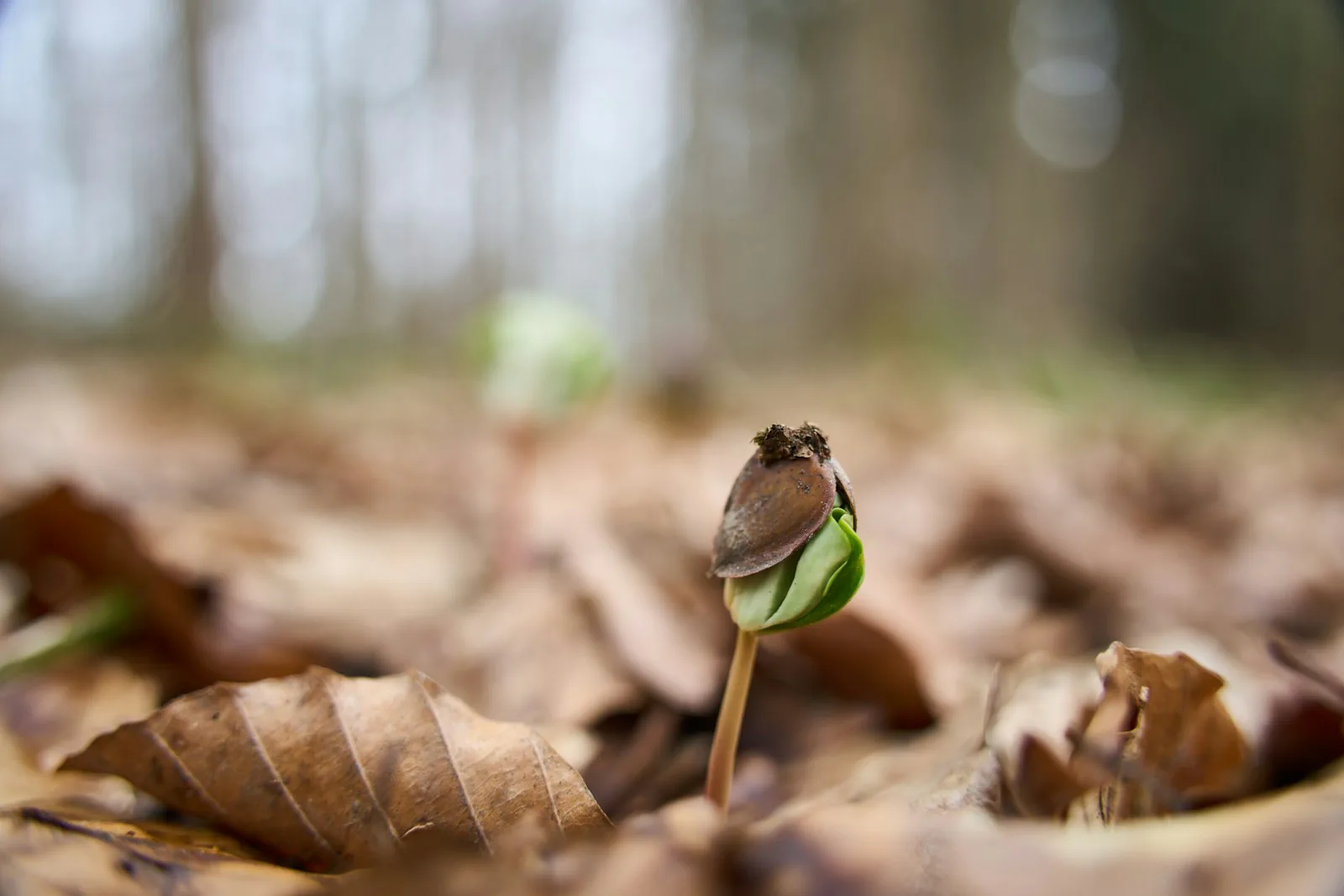
The forest does not need a month off from us. We need a month of remembering it is not ours.
From the first of May to the first of June nobody walks. Not the guides, not the wardens, not the people who write to ask, very reasonably, whether just one small group on one quiet morning would really be so bad. The gate is closed and the lines are quiet, and the forest does what it does in May, which is raise its young in a silence we would break just by being there.
We did not invent the closure. The wardens have kept the shore path shut through the nesting month for as long as there has been a shore path. What we did, in our second season, was extend it to the whole forest and to ourselves, and that second part was the hard one. It is easy to close a gate on other people. It is very hard to keep four guides off the lines they have walked every week for years.
It is the hardest month to give up because the light in May is the best of the year. Low, long, and full of pollen that holds the shafts in the air for an hour instead of nine minutes. The mornings are cool enough for mist and warm enough to stand still in. We know exactly what we are missing. That is the point of closing. A closure that costs nothing means nothing.
What happens while we are gone
The wardens send us photographs, taken from a long way off, and we pass them around the way other people pass around holiday pictures. What is in them, most years:
Ground nesters on the shore path, in the grass between the stones, exactly where a boot goes.
Owls in the stone pocket, in the split oak above where the tents would be.
Deer on the Canopy Line using the trail as a trail, because for one month it is theirs and they seem to know it.
Trout in the pool below the third stone of the crossing, once the silt has settled.
The moss recovers faster than you would believe. A season of feet on the Understory Loop leaves a pale line down the middle of the path where the moss has been worn to soil. By the second week of May the edges have started to close over it. By the end of the month the path looks like a suggestion, a slightly darker green through a green, and the first group of June walks it feeling like they are the first people ever to.
The creek, without the crossing being used, silts up the pool below the third stone and the trout come back to it. The clearing, without a group standing in it at noon, grows a foot of grass that we then spend the first week of June wading through. Everything we keep small by being there gets, for one month, to be its own size.
What we do instead
We spend the month on the maps. Every stop on every line gets walked once, alone, by the guide who runs it, to check what the winter moved: which stone has shifted at the crossing, whether the leaning ash is still leaning or has finally gone over, where the water has cut a new channel across the shore path. That is the only walking that happens. It is done in daylight, off the path wherever the path can be avoided, and quickly, and it is written down that evening.
The rest of the month is the unglamorous part of running a forest. Ropes get checked and retired. The stove that sticks gets replaced. The notes from the season, all of them, get read again and argued over, and the ones that are worth keeping go into the journal. The guides sleep. This last part matters more than it sounds.
The letters
Every April the letters start. A family that has planned a year around a walk in May. A photographer who has waited for exactly this light. Someone who is only in the country for that fortnight. We answer every one of them and the answer is always the same, and it never gets easier to write, and we have never once made an exception. The moment there is a good enough reason, the closure is a suggestion, and a suggestion is not a closure.
June
The first walk of June is the one the guides argue over. Whoever gets it walks a forest that has forgotten us. The path is soft. The deer do not move until you are close. The light, still nearly May light, comes down through a canopy that has thickened for a month without anyone underneath it, so the shafts are narrower and brighter and land in places we did not expect.
For one morning you can feel it, the whole forest holding still to see what you are going to do.
It does not last. By the second week the path is a path again and the deer have remembered what a group of eight sounds like. Everyone who has walked that first morning says the same thing afterward, which is nothing at all.
If you are booking
June, especially the first two weeks, gets you something close to that first morning.
April gets you the last of the spring light and the forest at its noisiest, which is its own thing.
May gets you a letter. We will write back, and we will say no, and we will mean it kindly.
Written for 12:00 on the line

More from the line.

Season
5 min read
September, when the light comes back
Elin on the first cold mornings, and why the Night Line is best right now.
Elin Hartmann

Gear
4 min read
One pack between eight
Tomás on the shared kit, and why nobody carries the stove alone.

Tomás Ferreira
Light
5 min read
Where the water goes quiet
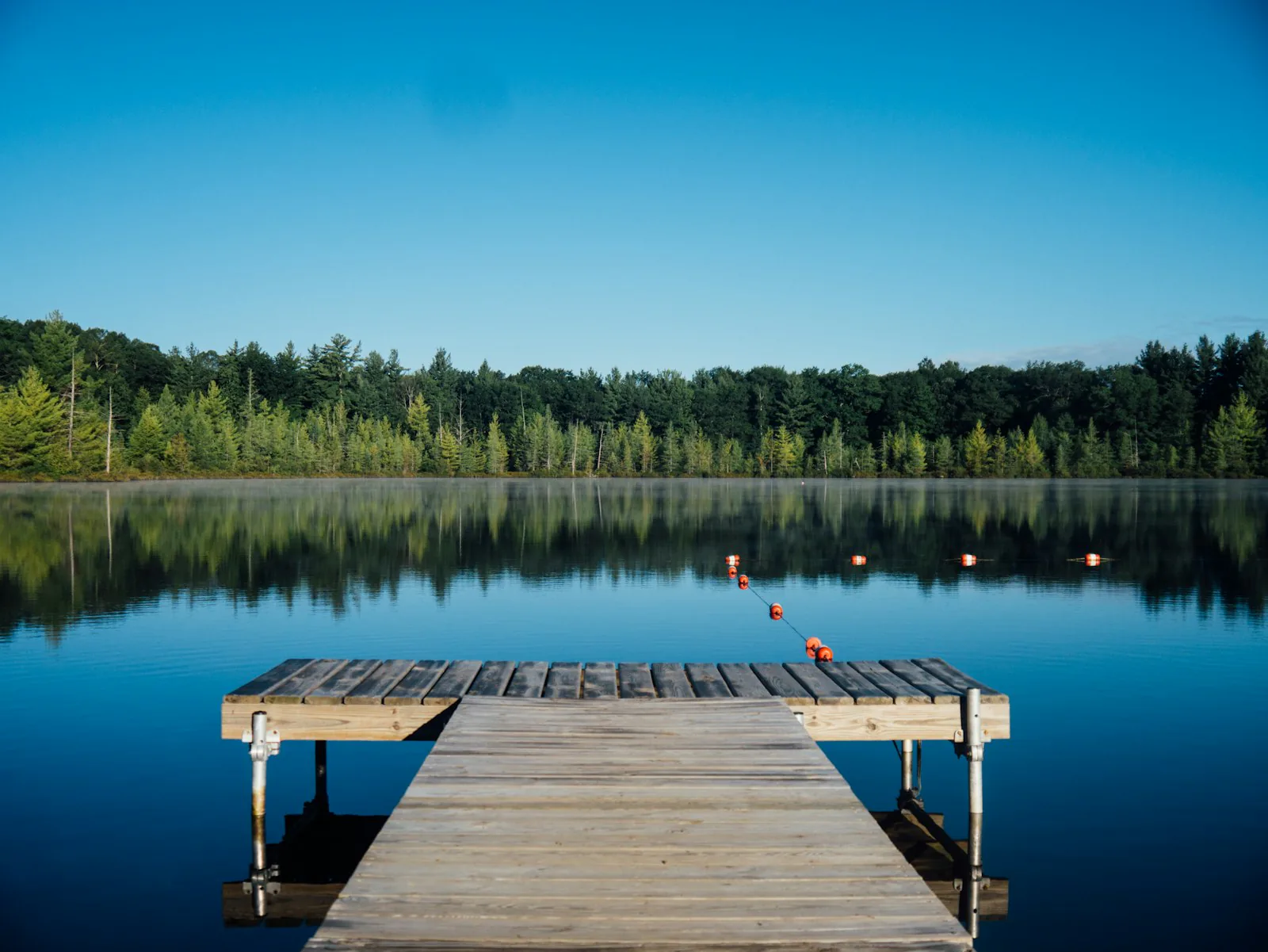
Jonas on the ten minutes at the far shore when the lake stops moving.

Jonas Vik